Trimess

Tuesday, January 31, 2012

DRIVING TRIMET EQUIPMENT IS DANGEROUS TO OUR HEALTH AND SAFETY
I CAN'T EVEN SEE THE TRAFFIC LIGHTS-DAVE HAS TO TELL ME WHEN THE LIGHT IS GREEN!
ANOTHER GREAT QUOTE FROM PORTLAND MERCURY BLOGGERS
""This city is run by children, for children. And not real children,
because then our schools might be good. No, it's run for 30-year-old
children. ""
Portland Mercury | Blabby
Portland Mercury | Blabby
TRIMET BRAGS ABOUT ITS U-TURN ON FARES
Fare enforcement has never been high on the list of priorities for Trimet, now in business for 42 years.
For 40 years they have had this laissez-faire attitude about fares and fare enforcement.
Then all of a sudden the power elite of TRIMET decide that fares are important and must be collected and enforced.
They sprung this change on an unwitting and uneducated population and now brag at the "great job" they are doing.
The power elite have done nothing to simplify the fare system, or secure the MAX stations, or even make sure the ticket machines are 100% reliable.
Nope, they are just proud that they have been able to sik the cops and fare inspectors on a mostly poor and unsuspecting population.
Personally, I think its pathetic that citizens are not even given a first time warning, its just another example of government preying on the citizens to sustain itself.
Does Trimet meet basic standards of Timetables, shift schedules and break periods
There is a common myth that drivers are the "boss of the bus". In reality bus drivers often feel themselves to be prisoners of the timetable and unpredictable or unsocial shift times. They often feel helpless in the face of conflicting demands on them to stick to the timetable, drive safely, and provide a friendly service to passengers.
This powerlessness, or "low autonomy" as the experts call it, is in itself a cause of stress. Working-time practice should include
The working week should not be more than 40 hours, and the normal working day not more than eight hours.
No driver should be allowed to drive continuously for more than four hours without a break. Ideally a twenty minute break should be provided after two hours of continuous work.(not recovery time but break time) Drivers should be able to use their breaks to refresh and replenish themselves.
There should be enough time in the working day to reduce the conflict between the demand to stick to the timetable and the need to drive safely. This conflict is the underlying cause of a great deal of stress for drivers, resulting in them either driving too fast or being continually behind schedule.
The daily rest of drivers should be at least 11 consecutive hours, and split shifts should be avoided.
Assignments (routes, times, etc) should be regular and predictable, not day-to-day.
Days off should be guaranteed and should be at least two days at a time.
This powerlessness, or "low autonomy" as the experts call it, is in itself a cause of stress. Working-time practice should include
The working week should not be more than 40 hours, and the normal working day not more than eight hours.
No driver should be allowed to drive continuously for more than four hours without a break. Ideally a twenty minute break should be provided after two hours of continuous work.(not recovery time but break time) Drivers should be able to use their breaks to refresh and replenish themselves.
There should be enough time in the working day to reduce the conflict between the demand to stick to the timetable and the need to drive safely. This conflict is the underlying cause of a great deal of stress for drivers, resulting in them either driving too fast or being continually behind schedule.
The daily rest of drivers should be at least 11 consecutive hours, and split shifts should be avoided.
Assignments (routes, times, etc) should be regular and predictable, not day-to-day.
Days off should be guaranteed and should be at least two days at a time.
DOES TRIMET MEET MINIMUM STANDARDS OF ERGONOMICS?
Bus compartments are often uncomfortable, inflexible, and exposed to
the elements which makes them too hot or too cold. No allowance is made
in the design for drivers of different height or weight. The ideal cabin
design should include the following:
- The driver’s seat should be vertically and horizontally adjustable and have adjustable lower back support and adjustable springs. The controls for adjusting the seat must be easy to operate.
- The steering wheel should be no more than 460 mm in diameter and be adjustable along the axis of the steering column. Its angle of inclination should also be adjustable.
- The pedals should be within easy reach for small and tall drivers alike. They should have equal angles.
- The dashboard should have easy to read displays which are arranged according to functions and frequency of use. It should be easy and safe to operate all manual controls, especially emergency controls.
- Big and small drivers must be able to enter and leave the working space easily, and effective heating and cooling systems should be provided for the cab.
MARY FETSCH QUOTES

Boy, 11, arrested with gun on MAX ordered to wear GPS bracelet | NWCN.com Washington - Oregon - Idaho

THE TRANSFER PRINTERS
 |
| Cash register |
I had a very interesting conversation with an operator that saw a demonstration of those 'transfer printers'.
He said it reminded him of the McDonald's computer screen.
You know, when you buy a burger!
He then described how it worked, and that's when I got worried!
Do they actually expect us to work a 'cash register' and print a receipt every time someone pays a fare?
Because if they do, IT AIN'T GONNA WORK!
Monday, January 30, 2012
THEY HIDING SOMETHING?
A couple of weeks ago I sent a request for public records to Trimet for the pension amounts for Fred Hansen, Brian Playfair, Carolyn Young.
They acknowledged it and that was the end of it.
I tweeted Portland A-Foot's Michael Anderson asking if they had any sort of time limits to respond.
Here is his answer:
@PortlandAfoot: @APMARGULIES They have to give you a timeline "as soon as practicable" but don't have a set time to respond. http://t.co/ZEuygmHZ
They acknowledged it and that was the end of it.
I tweeted Portland A-Foot's Michael Anderson asking if they had any sort of time limits to respond.
Here is his answer:
@PortlandAfoot: @APMARGULIES They have to give you a timeline "as soon as practicable" but don't have a set time to respond. http://t.co/ZEuygmHZ

Dispatch
Operator upset she had her picture taken by person who was in their truck in front of a bus stop
Tri-Met's new ATM for trains: you
A couple of readers have alerted us to this one: The not-so-clever
people who have been running Tri-Met have come up with a proposal to
pile up tons of tax dollars for future rail projects. And apparently
the plan will mean new taxes for all of us. As one reader put it --
"Working with TriMet" Coffee Klatch Follow up
Greetings,
We discussed several items with the TriMet representatives
last night at the “Working with TriMet” Coffee Klatch. For those of you who
couldn’t make it, please find a general summary below regarding the budget cut
process and advocating tips.
HALIFAX METRO INVOLVED IN 663 COLLISIONS
Metro Transit buses were involved in 663 collisions over a one-year period, CBC News has learned.
CBC reporter Bob Murphy filed a freedom-of-information request with Metro Transit and received a database of the crashes involving its buses between November 2010 and November 2011.
It works out to be almost two incidents per day. Collisions range from minor bumps to more serious incidents involving pedestrians, which happened three times, according to the data from Metro Transit.
Metro buses involved in hundreds of crashes a year - Nova Scotia - CBC News
CBC reporter Bob Murphy filed a freedom-of-information request with Metro Transit and received a database of the crashes involving its buses between November 2010 and November 2011.
It works out to be almost two incidents per day. Collisions range from minor bumps to more serious incidents involving pedestrians, which happened three times, according to the data from Metro Transit.
Metro buses involved in hundreds of crashes a year - Nova Scotia - CBC News

Transportation chief says oil supply ‘unlimited’
In remarks that raised some eyebrows in the audience, the nation’s
top transportation official said this week that there is an “unlimited
supply of oil” in parts of the world.
U.S. Transportation Secretary Ray LaHood made that statement Wednesday at Virginia Commonwealth University at the end of a town hall meeting attended by about 75 students, staff, and faculty members.
READ HERE!
U.S. Transportation Secretary Ray LaHood made that statement Wednesday at Virginia Commonwealth University at the end of a town hall meeting attended by about 75 students, staff, and faculty members.
READ HERE!
Sunday, January 29, 2012
Re:Willamette Shore
Claim: The value of the Willamette Shore/Jefferson Street right-of-way is $0 since at least some of it is only an agreement to allow a rail line, and no railroad would be interested in purchasing it
Reality: I don't know if Erik (partially) owns his home or not, but he should understand that the value of it isn't what he could get for it today, but in the shelter it provides. Likewise, the value of the right-of-way is the ability to use it for a rail transit line.
(The value matters since the Federal government is willing to use that as match in a project funding agreement. Also, to be clear, I haven't been gung-ho for the streetcar project that was proposed.)
Reality: I don't know if Erik (partially) owns his home or not, but he should understand that the value of it isn't what he could get for it today, but in the shelter it provides. Likewise, the value of the right-of-way is the ability to use it for a rail transit line.
(The value matters since the Federal government is willing to use that as match in a project funding agreement. Also, to be clear, I haven't been gung-ho for the streetcar project that was proposed.)
"VIPR" teams...sheeesh
Transit Police Officers (TPD) teamed up with federal security partners this week on a 4-day mission on MAX. The VIPR teams (Visible Intermodal Prevention and Response) are Department of Homeland Security’s (DHS) federal agents. TriMet and our federal security partners conduct these types of deployments regularly at random times throughout the year. The missions are designed to enhance security by working in mass transit, aviation, maritime, rail and other transportation modes alongside local law enforcement agencies. The exact makeup of the VIPR teams is determined jointly with local authorities and DHS.
This particular deployment was not in response to any specific or recent activity or threat. The deployment started last Sunday, January 22nd, with teams riding the trains looking for any suspicious activity. They walked through trains and deboarded, allowing trains to continue revenue service. The missions were successful but reported back no higher-than-usual rates of arrest or exclusions.
People know "stay off Trimet" when it snows (or when it chains)
Overall ridership was down about 10 percent during last week’s two snow days. Ridership typically drops during winter weather events and last week’s snow days were no exception. TriMet sees many new riders during winter weather events, but a lot of people stay home or do not make as many trips as usual. Here are the ridership numbers for last week’s snow days:
Tuesday, January 17
· Bus - 208,700 (compared with Tuesday, Jan 10 - 216,400)
· MAX - 126,500 (compared with Tuesday, Jan 10 - 133,700)
Wednesday, January 18
· Bus - 198,800 (compared with Wednesday, Jan 11 - 219,500)
· MAX - 117,900 (compared with Wednesday, Jan 11 - 135,800)
His Holiness
There is going to be a lot of conversation in the coming weeks and months about fares. Should we re-structure them, how much should we raise them, how do we make them easier to collect, how much more should we be investing in enforcement, and how does it affect particular communities or particular stakeholders. It is an important topic - after all, about 1/4 of our operating budget comes from fares. When I talk to operators, no topic gets more attention. For example, we are getting pretty positive feedback on the transfer printer being showcased during this week's sign-up.
Most operators also tell me - get rid of the zones! One of my objectives, embedded in our five year plan - is making sure whatever we do in the short-term lines up with the trajectory we want to be on in the long term. More specifically, I think we need to modernize our fare system, and move to the next generation of electronic fares - that will take a few years - but one thing we've heard from other transit agencies who have already implemented electronic fares: "...the first thing you need to do is simplify your fare policy and structure as much as possible." Electrons don't make a complex fare system simple all by themselves.
Between now and February 8th, I will be working to put together the budget plan based on the work of the budget task force, the nearly 5,000 survey responses we got, stakeholders, and what I've heard over time from our operators and other staff. A fare proposal will be part of that - and then the whole community of transit riders will have a chance to engage on the topic. Much more to come.
Best
Neil
Neil
CHANGE THE RULES!
Rick Van Beveran used to tell us occasionally that the TRIMET CHARTER does not require that the TRIMET BOARD listen to any testimony from the public.
That's a truly telling statement about the governance of our transit system.
They have been allowing testimony however, but its limited to 3 minutes.
They need to allow at LEAST FIVE MINUTES for members of the public to speak.
AND THEY NEED TO TAKE IT SERIOUSLY, NOT JUST SIT THERE AND LISTEN POLITELY!


They do have a clue at least
Though TriMet strives to balance simplicity and ease of use for the customer vs. offering different products to address specific markets, it is apparent that over time the fare system has become too complicated, with too many different products. It is very difficult
17
for new and infrequent riders to figure out, primarily due to a zone system that can be complicated even for frequent riders. This can be a barrier to new riders, and for existing riders, the complex fare structure can lead to disputes at the farebox. Another source of customer concern is that transfer times are different on bus and rail. TriMet will review changes to both fare policy and technology to address these concerns.
New riders and visitors in particular complain that it is difficult to determine the correct fare to buy. TriMet’s own research on how riders buy fares shows that new and infrequent riders often buy the wrong fare because they have difficulty figuring out zones.
In addition to the zones, the fare structure is complicated by the fact that TriMet has more than 35 different fare instruments, including a variety of tickets and passes, for customers to choose. For example, there are 5 different monthly passes: adult all zone, adult zone 1 and 2, adult zone 2 and 3 zone, honored citizen, and youth. In addition, TriMet issues an annual pass, a half monthly pass, a 30 day rolling pass, a 14 day rolling pass, a 7 day rolling pass, a packet of ten ride tickets, a seven day scratch-off pass, an upgrade, and employer passes.
TriMet does operate commuter rail service. Most transit properties charge a premium fare for commuter rail service. When the WES commuter rail service began, an interagency agreement specified that the fare would not be higher than TriMet’s fares. The cost to ride WES is an all zone fare with a free transfer to other TriMet service. Because WES provides premium commuter service, a premium fare could be considered as part of the fare review. However, a premium fare would need to be balanced against the potential negative effect on ridership.
AND IMPOSSIBLE FOR OPERATORS TO READ I ADD!
17
for new and infrequent riders to figure out, primarily due to a zone system that can be complicated even for frequent riders. This can be a barrier to new riders, and for existing riders, the complex fare structure can lead to disputes at the farebox. Another source of customer concern is that transfer times are different on bus and rail. TriMet will review changes to both fare policy and technology to address these concerns.
New riders and visitors in particular complain that it is difficult to determine the correct fare to buy. TriMet’s own research on how riders buy fares shows that new and infrequent riders often buy the wrong fare because they have difficulty figuring out zones.
In addition to the zones, the fare structure is complicated by the fact that TriMet has more than 35 different fare instruments, including a variety of tickets and passes, for customers to choose. For example, there are 5 different monthly passes: adult all zone, adult zone 1 and 2, adult zone 2 and 3 zone, honored citizen, and youth. In addition, TriMet issues an annual pass, a half monthly pass, a 30 day rolling pass, a 14 day rolling pass, a 7 day rolling pass, a packet of ten ride tickets, a seven day scratch-off pass, an upgrade, and employer passes.
TriMet does operate commuter rail service. Most transit properties charge a premium fare for commuter rail service. When the WES commuter rail service began, an interagency agreement specified that the fare would not be higher than TriMet’s fares. The cost to ride WES is an all zone fare with a free transfer to other TriMet service. Because WES provides premium commuter service, a premium fare could be considered as part of the fare review. However, a premium fare would need to be balanced against the potential negative effect on ridership.
Bus transfers are made of flimsy paper, are extremely difficult for riders to decipher and difficult for operators to issue because they must be ripped individually.
AND IMPOSSIBLE FOR OPERATORS TO READ I ADD!


For TriMet, image is everything

BUSINESS MAN TO REPLACE LERBACH?

It used to be pretty predictable that a man/woman from the minority race would be fairly progressive and be a good watch dog for those less fortunate, but those days are gone.
Kitzhaber turned out to be a Judas, won his office via labor now is turning his back on labor. Of course its not really surprising.
Saturday, January 28, 2012
OHSU tram tour
The OSHU tram turned 5 yesterday, so today they had a birthday party for it in the Center for Health & Healing which is OHSU's South Waterfront location & the bottom terminus for the tram. Inside was tram artwork & photography, a couple of tram operators with some of the tools & tram parts & segments of the cables to see up close, and also cupcakes. Every half hour or so they ran tours of the engine room and control room.
More pictures....
More pictures....

Remember this?
This was a microphone that was plugged into the main bus speaker so you could call stops without losing your teeth. It turned out to be another failure.

STEVE CLARK REPORTS ON THE ARBITRATION
Hearing will be Mid March, decision mid April, but the contract expires THIS COMING NOVEMBER!

TRANSPARENT TRIMET (hehe)?
Well I guess they do have transparency when it comes to their bus GPS data. Not that that actually means much in terms of what the word TRANSPARENCY is supposed to mean. They are the leader in this sort of technology, but the lagger in the technology that helps secure stations and pay/enforce fares. Which is more important? I say the latter.
Transit transparency: Open data in action ~ Policy by the Numbers
Transit transparency: Open data in action ~ Policy by the Numbers
IS MACFARLANE ABOUT TO USE THE TWINKEE DEFENSE?
 Hostess Brands asks to shed union obligations
Associated Press
Posted on January 26, 2012 at 3:00 PM
Updated yesterday at 8:04 AM
NEW YORK (AP) — Hostess Brands Inc., the bankrupt maker of Wonder
Bread and Twinkies, has asked a judge to slash some of its commitments
to union employees, saying it's the only way it can emerge from
bankruptcy as a viable company.
The Teamsters union issued a swift rebuke on Thursday, saying
Hostess was trying to "bully" its way out of obligations to its
employees.
Hostess filed for bankruptcy protection earlier this month, hobbled
by Americans' preference for healthier snacks, and stiff competition
from other sweets makers like Entenmann's. The announcement came just
three years after Hostess emerged from a previous bankruptcy
restructuring.
Unions represent more than three-quarters of Hostess' 19,000 employees, the company said.
Hostess is based in Irving, Texas.
I GOT MY OWN PROPAGANDA CAMPAIGN!
My new blog title "Trimet Executives have the ethics of a Squid" is circulating very well around the net.
You see it numerous times in numerous places:
 IF PEOPLE SEE IT OVER AND OVER THEY JUST MIGHT START REPEATING IT THEMSELVES!
You see it numerous times in numerous places:

JACK GETS IT

Tri-Met collapsing under its own train madness
Making it much more expensive
for honest passengers to ride, all the while cutting bus service, is
just going to accelerate the death spiral. Goldschmidt crony Fred
Hansen parachuted out just before the plunge became obvious. Why his
hapless successor took the gig is anybody's guess.
Tri-Met's allowed itself to be Blumenauered into oblivion. You'll have to ride a bike, because there won't be a bus, and the streets will be pretty much blocked to cars.
And now we're up to a five buck minimum entry fee every time we go downtown? The phrase "ghost town" comes immediately to mind.
Tri-Met's allowed itself to be Blumenauered into oblivion. You'll have to ride a bike, because there won't be a bus, and the streets will be pretty much blocked to cars.
And now we're up to a five buck minimum entry fee every time we go downtown? The phrase "ghost town" comes immediately to mind.
Friday, January 27, 2012
TRIMET CREATED THEIR OWN FAILURE
Trimet's transfer system is and has been a miserable failure for a long long time. I have never seen another Transit district allow a ride to and from a destination on the same transfer.
There are very few places that have such unreadable and unenforceable transfers in use. Can drivers actually read the day code? The zone code? The classification code?
Some not too bright drivers actually do attempt to read all of the above and try to enforce what is actually a completely unenforceable methodology.
Passengers can use the same transfer for days, and many do, as a driver I gave up years ago trying to deal with the stupidity of the transfer process.
Trimet created a completely unsecured light rail system. The "honor system". It was all part of the 60's and feel good 70's mantra.
It was a different world back then don't forget for those of you who were actually alive and old enough to remember.
The system was meant to be "friendly" and easy to use.
A fare-less square gave riders easy access to buses and trains and allowed for very simple fare evasion.
When you think about it, it seems the planners INTENTIONALLY created a system that was destined to have problems.
Why would they do that?
I think they did it because they wanted to BRAG ABOUT PORTLAND HAVING THE HIGHEST PER CAPITA RIDERSHIP IN THE COUNTRY.
They achieved that goal by creating a unworkable transfer product and a 'fare FREE' zone where people could easily get on the system without having to pay.
AND THEN THE BEAN COUNTERS GOT TO DO THEIR MAGIC.
Abracadabra, LOADS OF BOARDING RIDES, LOADS OF THEM.
And then the planners started using those numbers to show PAPA FED that PORTLAND IS THE PLACE TO PLUNK DOWN BILLIONS OF DOLLARS for silly little projects that basically served people of wealth.
And the FEDERAL GOVERNMENT FELL IN LOVE WITH PORTLAND because we HAD THE MOST RIDES PER CAPITA!
And even more money flowed into PORTLANDIA!
Then one day PAPA FED SAID, sorry Portlandia, we can't give you any more money.
And all those 'fake' boarding rides became somewhat irrelevant, because the PORTLAND BIG SHOTS couldn't turn boarding rides into cold hard cash.
AND THEN THEY WERE IN TROUBLE;
HOW DO WE GET PEOPLE TO ACTUALLY PAY TO USE OUR SERVICE wondered the big shots?
AND NOW THEY ARE IN BIG BIG TROUBLE, THEY SEE THE FUTURE, AND IT IS BLEAK.
Union vote by proxy?
According to a very knowledgable source unless specifically prohibited in the bylaws-union members should be able to by designating a proxy.


Union to TriMet: Cut managers, not drivers
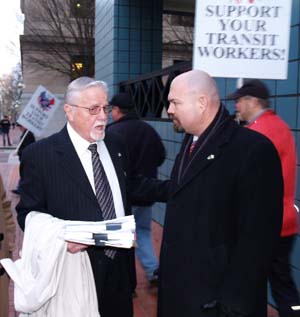
Stedman’s background is as a labor relations consultant. He takes credit on his web site for defeating a union campaign. In 2011 he represented Mt. Hood Community College, where he won concessions from faculty after a near-strike.
Full article is HERE!
HOLY COW-KIDS IN AMERIKA THINK NOTHING OF INFLICTING VIOLENCE ON EACH OTHER
Even though our ignorant management refuses to put audio into the video on buses, this clip shows how vital that is to capture the full extent of things going on in a bus:
As a school bus loaded with 67 students headed along a foggy, narrow southwest Marion County road at daybreak a few weeks ago, seven middle school students jumped a 13-year-old, the new girl on the bus that morning.Within two minutes, the Liberty Middle School child was beaten unconscious. Though the community was concerned by the Jan. 6 attack, it wasn't until Wednesday's release of a security video, which showed the attack, did people become outraged.
The video, released Wednesday by the State Attorney's Office, turned an already-alarming event into a movie of sorts, one where viewers could get their own look at what happened instead of relying only a written interpretation.
Judith Tellerman, a clinical professor of psychology at the University of Illinois College of Medicine, watched the video and said the reason community reaction has escalated is simple: The incident came to life.
A newspaper article simply states a beating occurred. An Ernest Hemingway novel, on the other hand, captures sights, smells and sounds. In this case, the video gives that kind of context.
TIFFANY SWEITZER NEEDS TO RESIGN RIGHT NOW!
Ms Sweitzer has questionable ethics after revelations about her illegal parking lot that collected hundreds of thousands of dollars, which I understand, is still making money for her!
HERE is my complaint to the government ethics commission
HERE is the Portland A-Foot article on this subject.
HERE is the Tribune article on this subject.
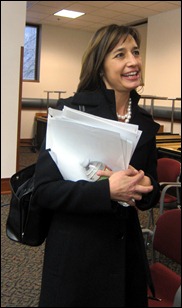
HOW TO FIX THE TRANSIT SYSTEM-BY AL M
As posted to the Joe Rose blog:
Here's my idea, after driving Trimet and studying Trimet for the last 15 years.
All executives, their staffs, be immediately dismissed.
Capital projects dissolved completely.
Trimet board of directors DISSOLVED and a new board created that should be elected or appointed by LOCAL ELECTED OFFICIALS.
Expansion ideas all terminated until such time that Trimet becomes financially stable.
Rides cost $1 per vehicle, no time limits, no zones, no classifications, no transfers.
Each boarding will cost an additional $1, a smart card system can be used as a debit card or $1 cash will be accepted by on board fare boxes on buses, rail stations will be secured so that riders must pay BEFORE entering any station.
The only passes that will be issued are to the disabled, $25 per month unlimited rides on Trimet or Lift.
There will be one manager for every 100 operators, that would be about 15 managers. (that includes road supervisors as well as station managers)
The General Manager will be appointed by the elected board of directors, his staff will be limited to one administrative assistant.
Legal department will be limited to 3 attorneys and three assistants.
HR will have one director with one assistant.
Mechanics division will employ based on free market principles.
Marketing department immediately dissolved as Trimet is a monopoly and does not need marketing.
Here's my idea, after driving Trimet and studying Trimet for the last 15 years.
All executives, their staffs, be immediately dismissed.
Capital projects dissolved completely.
Trimet board of directors DISSOLVED and a new board created that should be elected or appointed by LOCAL ELECTED OFFICIALS.
Expansion ideas all terminated until such time that Trimet becomes financially stable.
Rides cost $1 per vehicle, no time limits, no zones, no classifications, no transfers.
Each boarding will cost an additional $1, a smart card system can be used as a debit card or $1 cash will be accepted by on board fare boxes on buses, rail stations will be secured so that riders must pay BEFORE entering any station.
The only passes that will be issued are to the disabled, $25 per month unlimited rides on Trimet or Lift.
There will be one manager for every 100 operators, that would be about 15 managers. (that includes road supervisors as well as station managers)
The General Manager will be appointed by the elected board of directors, his staff will be limited to one administrative assistant.
Legal department will be limited to 3 attorneys and three assistants.
HR will have one director with one assistant.
Mechanics division will employ based on free market principles.
Marketing department immediately dissolved as Trimet is a monopoly and does not need marketing.
Communications department immediately dissolved as unnecessary.
IT department dissolved until such time that Trimet is financially solvent and can afford luxuries.
IT department dissolved until such time that Trimet is financially solvent and can afford luxuries.
Citizens advisory committee to be comprised of CITIZENS THAT USE TRANSIT.
PROBLEMS ALL SOLVED.....
ANOTHER PERSPECTIVE
I have no issue paying for part of my benefits as long as I know our
collective dollars going back to TM are being spent WISELY. TriMet has a
long track record of scary (and FUEL-ish) spending. (A QUARTER MILLION
DOLLARS for a big deer art statue? Really?) Another $120k MANAGER? Has
anyone really researched the organizational chart? There must be one
manager/director/leadership position for every 5-10 non manager employee
(I don’t know the exact figure but TM is top heavy)
2) WE DIDN’T BREAK THE LAW in our negotiations. TRIMET DID. AND, we haven’t slung anywhere near the mud TM has slung at us. Negotiating in good faith? The TM talk internally has been butterflies and rainbows…but that’s not the message the media and the public get.
Read the entire article at MAX FAQ's!
2) WE DIDN’T BREAK THE LAW in our negotiations. TRIMET DID. AND, we haven’t slung anywhere near the mud TM has slung at us. Negotiating in good faith? The TM talk internally has been butterflies and rainbows…but that’s not the message the media and the public get.
Read the entire article at MAX FAQ's!
JACK BOGDANSKI-telling it like it really is in Portland
Just as we wrote when
it happened, it was a smart move on the other passengers' part to shut
the heck up and get off at the next stop. Check out the latest MAX
shocker from the PoPo:
Just some examples
{Editors note: Jason Mchuff and Erik Halstead have had a long running feud, Jason insists his point of view is the correct one and Erik insists his point of view is the correct one. I'm of the opinion that both points of view have validity}
Thursday, January 26, 2012
What TriMet Should do re: Healthcare Costs
I think if TriMet wants to fix the healthcare problem, all they need to do is pass the $$ for health care to the union & tell the union that they're in charge of providing health care coverage in whatever way they see fit.
At that point the union/employees are directly in charge of what their plan looks like, how much they do/don't pay, retiree benefits, etc. When the plan costs goes up, then the union has to deal with collecting more money from the employees, reducing benefits, finding cost savings, explaining the cost rise to the employees, etc.
Seems like everybody wins.
At that point the union/employees are directly in charge of what their plan looks like, how much they do/don't pay, retiree benefits, etc. When the plan costs goes up, then the union has to deal with collecting more money from the employees, reducing benefits, finding cost savings, explaining the cost rise to the employees, etc.
Seems like everybody wins.
THE CHANGE IN MY BLOG TITLE HAS BEEN A TOPIC OF CONVERSATION

Many of my associates have been asking me about the name change for my blog.
I try to explain to them that since TRIMET is using its WEB SITE to basically defame and demean its union personnel I thought it was appropriate to use my web site to return the favor to TRIMET EXECUTIVES.
I would have never thought of doing such a thing as this in the past, but the past is gone, we have a whole new bunch of tyrants ruling the roost and apparently the gloves are off.
TWITTER IS THE TRUE WAY TO JUDGE PUBLICS PERCEPTION OF A TRANSIT AGENCY
Forget high priced consultants and studies, just keep an eye on Twitter!
"The most interesting thing we found is that transit riders do not give any positive sentiment at a particular time. They only give negative sentiment," he said. Now, this may seem depressing if you work for one of these agencies. "But that’s not very disappointing," Hasan said, "because we found that the lack of negative sentiment is basically what transit authorities should look for. If there’s no negative sentiment at any given time, that means that things are running smoothly."
Science Confirms What We Know About the CTA and Twitter - The 312 - January 2012 - Chicago
"The most interesting thing we found is that transit riders do not give any positive sentiment at a particular time. They only give negative sentiment," he said. Now, this may seem depressing if you work for one of these agencies. "But that’s not very disappointing," Hasan said, "because we found that the lack of negative sentiment is basically what transit authorities should look for. If there’s no negative sentiment at any given time, that means that things are running smoothly."
Science Confirms What We Know About the CTA and Twitter - The 312 - January 2012 - Chicago

TIFFANY SWEITZER NEEDS TO BE REMOVED FROM THE TRIMET BOARD
The senior member of TriMet’s board
said Wednesday that she knew her development company wasn’t allowed to
pave a Pearl District parking lot when tenants started asking about it
in 2008.
But the prominent Portland developer said she did it anyway, because
she disagrees with the city’s ban on adding surface auto parking
downtown. Her company charged $100 a month per space in the illegal
112-space lot for three years.TriMet board member says she knowingly violated city code with Pearl parking lot | Portland Afoot
I can point to several THOUSAND Trimet riders who object to paying the EXORBITANT Trimet fares,but THEY ARE BEING HAULED INTO COURT AND EXCLUDED FROM TRIMET.
This SQUID thinks she is above the law!
Wednesday, January 25, 2012
DESTROYING TRIMET LIES AND DISTORTIONS
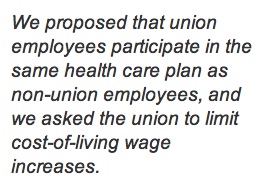
“Empower. Trust. Stand Behind.” | MAX FAQs
Dueling disabilities on the 48
A man with a cane who had limited mobility got into a fight with a man in a wheelchair when he wouldn't move so the wheelchair could board! The wheelchair ran over the feet of the man with a cane and the fight was on!
PROUD TO BE PART OF THE RAG TAG ARMY THAT IS FIGHTING THE SUPERPOWER
I watch the testimony of those of us who are struggling to fight the unstoppable power of the behemoth known at TRIMET, and I gotta say we are a rag tag bunch very dedicated activists.
I think we should all stand proud even though it appears we are talking to a light post!
MY VOTE FOR THE BEST ESSAY ON THE LABOR PROBLEMS AT TRIMET
CLICK HERE TO READ!
But okay, fine. You want to bring union workers in line with non-union workers? Well then, we’ll just take that to its logical conclusion. Let’s see… about 30% of our buses have no air conditioning, so to help save money, we’ll disable the A/C in about 30% of TriMet offices, like, oh I don’t know, the top floor of Center Street to start. And just like operators use seniority to sign good runs, non-union employees can use how long they’ve been at TriMet to bid for a good office. So to the newly hired Executive Director of HR? Sorry my friend, you’ll probably get stuck with no air conditioning. Good thing Oregon summers are more or less mild. But don’t worry! Every hour or so you’ll be allowed to get up, drink some ice water, and use the bathroom, as long as you don’t take more than 10 minutes to do all that.
But okay, fine. You want to bring union workers in line with non-union workers? Well then, we’ll just take that to its logical conclusion. Let’s see… about 30% of our buses have no air conditioning, so to help save money, we’ll disable the A/C in about 30% of TriMet offices, like, oh I don’t know, the top floor of Center Street to start. And just like operators use seniority to sign good runs, non-union employees can use how long they’ve been at TriMet to bid for a good office. So to the newly hired Executive Director of HR? Sorry my friend, you’ll probably get stuck with no air conditioning. Good thing Oregon summers are more or less mild. But don’t worry! Every hour or so you’ll be allowed to get up, drink some ice water, and use the bathroom, as long as you don’t take more than 10 minutes to do all that.

“Empower. Trust. Stand Behind.”
This has been kicking around in my head since the budget tool was released. In part, as previously mentioned,
because I thought that was a poor representation of possible options to
save money. But more than that, all the sniping little comments in
there taking shots at the union made me feel very uncomfortable.
Personally I think that is grossly unprofessional for an official TriMet
release. It’s not empowering, it doesn’t show trust, and it certainly
isn’t standing behind union workers.
 Accusing the union of refusing to be reasonable: present
Acknowledging that TriMet broke the law: curiously absent
 Accusing the union of refusing to be reasonable: present
 Acknowledging that TriMet broke the law: curiously absent
Read the entire article at MAX FAQ's


WE LOVE LIGHT RAIL
Due to police activity, service is disrupted on MAX Blue and Red line
trains in Downtown Portland. Shuttle buses will service light rail stops
from the Rose Quarter Transit Center to the JELD-WEN Field MAX station.
The disruption may also cause delays to bus service. Riders should
expect delays.
JASON MCHUFF'S BUDGET PROPOSAL
TriMet budget thoughts and savings ideas
By Jason McHuff, jm@jasonmchuff.net
By Jason McHuff, jm@jasonmchuff.net
Tuesday, January 24, 2012
SHOW UP AT THE BOARD MEETING TOMORROW

Neil Macfarlane and First Transit are conspiring to destroy the human rights of transit workers in the Greater Portland Area.
They practice UNION BUSTING, NOT BUDGET REPAIR.
We need as many people as possible to show up for the next Trimet Board of Directors meeting Wednesday, January 25, City of Portland Building, Auditorium, 1120 SW 5th Avenue, Room C starting at 7AM. The board meeting starts at 9:00 am
LABOR RIGHTS ARE HUMAN RIGHTS
Bad management
headach, neckache and windshield wiper on passenger side is broken..they want maintenance to look at it instead of a new bus!..i can tell motor is broken!
THE TRIMET WAY-MANAGMENT BY INTIMIDATION
TRIMET managers continue their reign of terror using Stalinisttactics in its ongoing effort to humiliate and demoralize its employees.
FIRST TRANSITUNION BUSTER SPIES ride the system posing as actual riders and send in “secret”reports which management then takes as gospel truth to harass its operators.
There is the never ending “YOU DIDN’T CALL YOUR STOPS” violations that never seem toend . The management squids won’t define which stops to call, and don’t tellyou how to do the job correctly, they jus t continue down their path of endlessintimidation of its employees like we are “mind readers” and are supposed to knowwhat they actually want.
The whole thing has turned into a comedy show, this neverending persecution has led me to just do the best job I can and laugh when theycall me in for one of their phony meetings. I have taken steps to protectmyself from the libelous ‘secret liars’ and I would encourage others to do thesame.
Your employer is against you and the public has been turnedagainst you!
PROTECT YOURSELF!Nobody else will. The union is powerless in the face of management bullying!
The ‘secret liars’ are not only making up lies regarding thecall stop nonsense, which in reality is happening because TRIMET MANAGEMENT DID NOT FULFILL ITS RESPONSIBILITY IN UPGRADINGITS EQUIPMENT TO ADA COMPLIANT, but they are also making up nonsensesuch as “operator didn’t scan”.
Unless the ‘secret liars’ are sitting right across from adriver, they have no way to know what we are doing.
It’s just another STALINISTINTIMIDATION TACTIC.
BEWARE! SECRET LIARS ARE ON YOUR BUS! PROTECT YOURSELF FROMTHESE LIARS.
DON’T BACK DOWN TO THE MANAGEMENT IF YOU’RE DOING THE JOBCORRECTLY.
The ‘secret liars” are reporting every single thing they don’tlike about you:
“Operator braked too hard”
“Operator was not friendly”
“Operator ran a red light”
“Operator drove to close to bike”
"Operator is over weight"
"Operator is over weight"
IT GOES ON AND ON AND ON!
MANAGEMENT BYINTIMIDATION AND INNUENDO, STALIN WOULD BE PROUD.
The only part that Trimet has not included is the GULAGS and the firing squads.

BUMBLING GOVERNMENT-JENKINS AND MURRAY
The idiots that control the traffic signals at Jenkins and Murray have provided for DAILY huge traffic jams and tons of air pollution because the light is never properly timed.
Congratulations to the bumbling bureaucrats that have responsibility for creating this huge daily mess.


Congratulations to the bumbling bureaucrats that have responsibility for creating this huge daily mess.


Man spits in TriMet drivers face
PORTLAND -- Police were looking Tuesday morning for a man who spit in the face of a TriMet driver on NE 122nd, north of Halsey.
The passenger ran from the bus. His girlfriend was detained, according to TriMet officials. The couple boarded the bus without valid transfers, said Sgt. Pete Simpson. They were asked by the driver to leave the bus when the man spit on the driver.
http://www.msnbc.msn.com/id/46118886/ns/local_news-portland_or/t/man-spits-trimet-drivers-face/#.Tx8Sbvkr4jV
TRAINING RIDERS TO COMPLAIN
(Someone called customer service complaining an operator was talking on a
cell phone when they were actually using the bus phone. The dispatcher
called the operator to tell them, and was noting that the caller should
realize it wasn't a cell phone because he didn't think there were cell phone
handsets that look like the old-style ones found in the buses.)
cell phone when they were actually using the bus phone. The dispatcher
called the operator to tell them, and was noting that the caller should
realize it wasn't a cell phone because he didn't think there were cell phone
handsets that look like the old-style ones found in the buses.)
The Old Burger King Layover


I finally visited the remodeled Burlingame Fred Meyer yesterday.Back in the fall of 2007,I had a morning piece consisting of a 64,65 and 68.I used to have a 15 minute break at the Burger King.With the new remodel/demolition of the BK,the spot has been eliminated.
TRIMET EXECS ALL IN THE TOP 10%-most other full time people in top 25%
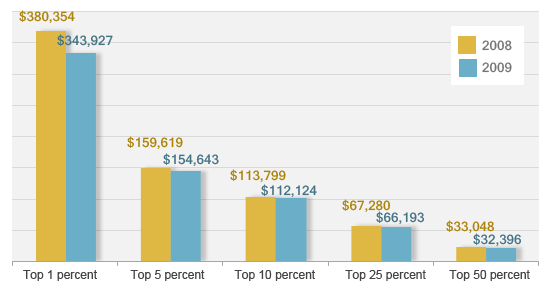
Now what exactly is the problem with transit?
ALWAYS LOOKING OUT FOR US
Be Safe! Safety is the most important part of customer service. Use caution when walking in the yard. Use handrails and watch for slippery steps. Be safe, go slow and watch for others!

COMMUNICATIONS PROCEDURES
· Dependable and effective communication is necessary for the safe and reliable operation of TriMet’s bus and light rail systems. Therefore, a radio system and pagers are provided for instant communication between employees working in the field to stay in direct contact with the Operations Command Center (OCC).
GLOSSARY
ADA ride: An ADA eligible customer is transported from an origin and to a destination within the ADA service boundary (3/4 mile of a fixed‑route).
ADA Eligible: The ADA rules state that if a person is unable to use fixed‑route service because of a disability, or is unable to get to/from a fixed‑route stop because of a disability, that person is eligible to receive paratransit service.
ADA: Acronym for the Americans with Disabilities Act, enacted into law in July, 1990.
Agency client: A person who is sponsored by a social service agency which contracts with TriMet to provide transportation for its clients. The agency is billed for the ride.

THE THIRD WORLD COMES TO AMERIKA
Never have seen anything like this in the USA, until now:
An unlocked panel door leading to a battery shut-off switch made it easy for a group of teenage criminals to disable a CTA bus, then climb aboard the darkened vehicle and attack its passengers, transit officials said Monday.
Bus robbers aided by unlocked battery panel door, CTA says - chicagotribune.com
An unlocked panel door leading to a battery shut-off switch made it easy for a group of teenage criminals to disable a CTA bus, then climb aboard the darkened vehicle and attack its passengers, transit officials said Monday.
Bus robbers aided by unlocked battery panel door, CTA says - chicagotribune.com
Monday, January 23, 2012

Subscribe to:
Posts (Atom)
It doesn't.
Sure it does, compared to like second rate, nationally unimportant cities that have none.